








































































Starting a bakery business from home in 2026 is a dream for many aspiring entrepreneurs who want to turn their love for baking into a profitable venture. With low overhead costs, flexible hours, and a growing demand for unique, homemade baked goods, a home bakery business is an excellent option for both hobbyists and professionals. In this guide, we’ll walk you through everything you need to know from planning to marketing and share my personal experience on how I earned $1,200 in just one month.
Why Start a Home Bakery Business?
The demand for homemade baked goods has increased in recent years. Customers are looking for quality, artisanal products that chain bakeries can’t always provide. A home bakery business allows you to:
- Work from the comfort of your home.
- Experiment with creative recipes.
- Build a loyal customer base locally.
- Generate extra income or even turn it into a full-time career.
Step 1: Research and Planning
Before you start baking, proper planning is crucial. Research your target market, potential competitors, and pricing strategies. Ask yourself:
- What baked goods are in demand locally?
- Who is my target audience?
- How much should I charge per item?
Creating a solid business plan ensures your home bakery business has a clear direction and goals. Include production estimates, ingredient costs, marketing strategies, and projected revenue.
Step 2: Setting Up Your Home Bakery
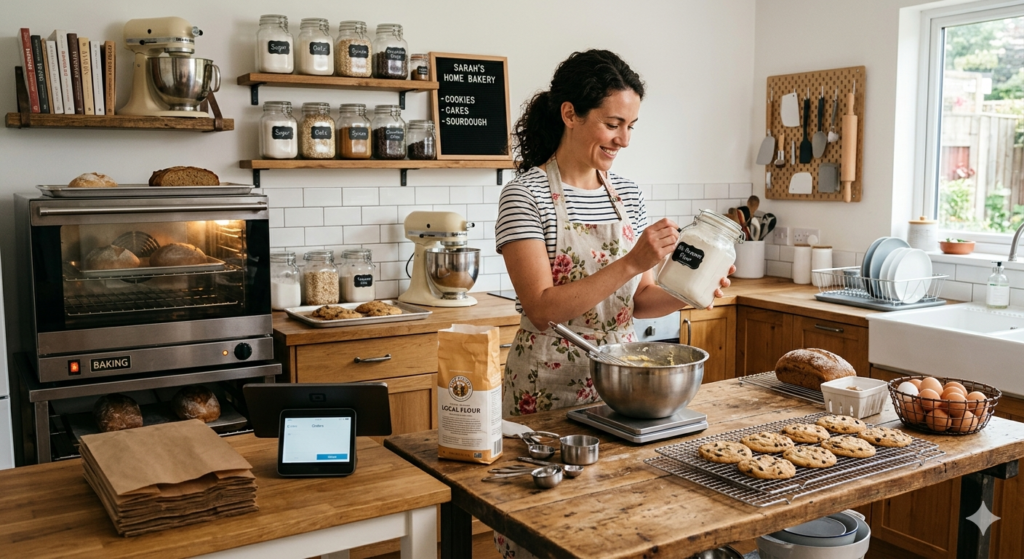
Your home kitchen must meet health and safety regulations. Here’s what you need to do:
- Check local regulations: Many regions require permits, licenses, and food safety certifications for home food businesses.
- Equip your kitchen: Invest in quality ovens, mixers, baking pans, and storage containers. A clean, organized kitchen helps maintain consistency.
- Create a dedicated baking space: Separate your bakery activities from regular household use to avoid cross-contamination and streamline operations.
By properly setting up, you’ll ensure your home bakery business runs smoothly and meets legal requirements.
Step 3: Choose Your Niche
Identifying your niche helps differentiate your products. Consider specializing in:
- Cupcakes, cakes, and pastries
- Gluten-free or vegan baked goods
- Custom cakes for birthdays and weddings
- Seasonal treats and holiday specials
Specializing allows you to market your bakery more effectively and attract a loyal customer base.
Step 4: Develop Your Menu and Pricing
A well-thought-out menu is essential. Start with 5–10 items and gradually expand. Pricing should cover:
- Ingredient costs
- Labor (your time included)
- Packaging
- Delivery or pick-up charges
For example, I created a menu of cupcakes, cookies, and small cakes. By pricing reasonably while maintaining quality, I quickly attracted repeat customers and boosted sales.
Step 5: Marketing Your Home Bakery Business
Marketing is key to your success. Use these strategies:
- Social media marketing: Platforms like Instagram, Facebook, and TikTok are perfect for showcasing your baked goods.
- Word-of-mouth referrals: Encourage satisfied customers to recommend your bakery.
- Local partnerships: Collaborate with cafes or small stores to sell your products.
- Online marketplaces: Use Etsy or similar platforms to reach a wider audience.
High-quality photos and engaging posts help build a brand that people trust.
Step 6: Handling Orders and Delivery
Efficient order management ensures satisfied customers. You can:
- Take orders via phone, social media, or an online form.
- Offer local delivery or pick-up options.
- Use reliable packaging to protect products during transport.
I personally handled orders through WhatsApp and social media, keeping a simple spreadsheet to track sales. Within one month, I fulfilled over 60 orders and made $1,200 in revenue from my home bakery business.
Step 7: Financial Management
Tracking income and expenses is vital. Set up a simple accounting system to monitor:
- Ingredient costs
- Packaging and utilities
- Marketing expenses
- Monthly profit
Use this data to adjust pricing, reduce costs, and maximize profits. Remember, keeping your finances organized is crucial for long-term success.
Step 8: Customer Service and Quality Control
Excellent customer service keeps customers coming back. Ensure that:
- Orders are accurate and delivered on time.
- Products are fresh and of high quality.
- Feedback is welcomed and acted upon.
I made it a rule to personally follow up with customers after delivery. Positive reviews and repeat orders contributed significantly to my $1,200 month.
Step 9: Scaling Your Home Bakery
Once your bakery gains momentum, consider scaling up:
- Offer catering services for events.
- Create subscription boxes for regular customers.
- Launch seasonal promotions or limited-edition items.
Scaling strategically helps increase revenue while maintaining quality.
Step 10: Legal Considerations
Don’t overlook legal aspects:
- Obtain necessary food licenses.
- Understand zoning laws for home businesses.
- Keep insurance to cover potential liabilities.
Compliance builds trust and protects your home bakery business from unexpected issues.
My Personal Experience: Making $1,200 in One Month
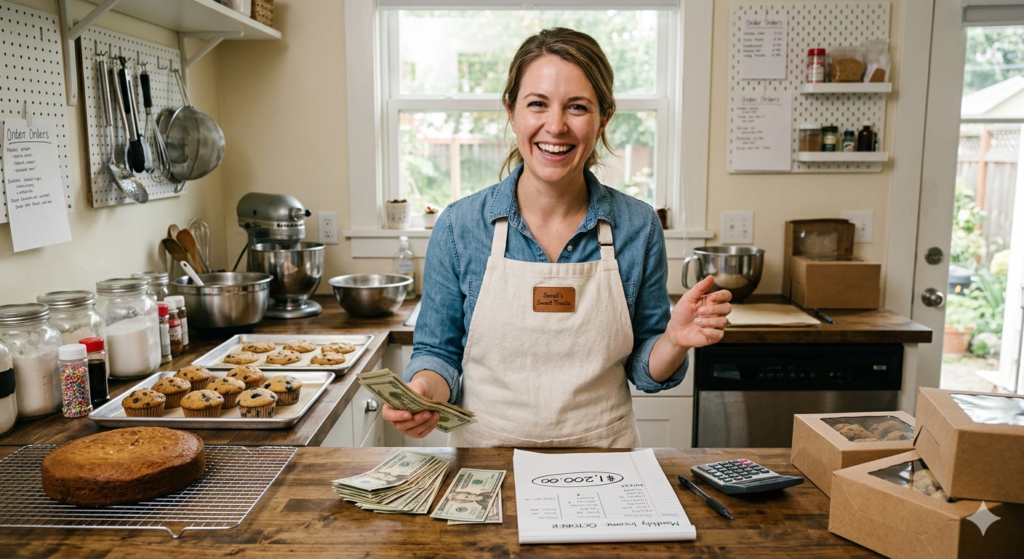
Starting a home bakery business can be rewarding. I began by baking small batches of cupcakes and cookies, taking orders from friends, family, and neighbors. I marketed primarily on Instagram and local Facebook groups. By focusing on quality, consistent delivery, and engaging with customers personally, I grew my client base quickly.
Here’s a breakdown of how I made $1,200 in one month:
- Sold 30 dozen cupcakes at $20 per dozen = $600
- Sold 25 custom cookies at $10 each = $250
- Sold 5 small cakes at $70 each = $350
Total Revenue = $1,200
The key to this success was consistency, quality, and leveraging social media to reach local customers.
Tips for Success in a Home Bakery Business
- Start small and scale gradually.
- Focus on quality over quantity.
- Engage with customers on social media.
- Keep accurate records of expenses and revenue.
- Experiment with new flavors and designs to keep the menu exciting.
Challenges to Expect
Like any business, a home bakery business has challenges:
- Meeting regulatory requirements
- Managing busy periods
- Handling customer complaints
- Maintaining product consistency
Being prepared for these challenges ensures you stay ahead and continue growing.
Conclusion
Starting a bakery business from home in 2026 is both feasible and profitable with proper planning, marketing, and execution. By setting up a compliant kitchen, identifying a niche, developing a strong menu, and engaging with customers, you can turn your passion for baking into a successful home bakery business. My personal journey of earning $1,200 in just one month demonstrates the potential if you focus on quality, customer satisfaction, and strategic marketing. Whether you aim for a side hustle or a full-time business, the key is persistence, creativity, and smart management.
Frequently Asked Questions (FAQs)
1. Do I need a license to start a home bakery business?
Yes, most regions require food licenses, health permits, and sometimes home-based business permits. Check your local regulations before selling baked goods.
2. How much can I earn from a home bakery business?
Earnings vary depending on product pricing, demand, and marketing. Personally, I made $1,200 in just one month by focusing on quality and building a local customer base.
3. Can I sell baked goods online from home?
Absolutely. Social media platforms, marketplaces like Etsy, and local delivery services can help you sell your products online while staying compliant with food regulations.
4. What types of baked goods are most profitable?
Custom cakes, cupcakes, cookies, and specialty items like gluten-free or vegan treats tend to be profitable. Seasonal and limited-edition items can also boost sales.
5. How do I ensure my products stay fresh for customers?
Use proper packaging, store baked goods at the correct temperature, and set clear delivery/pickup schedules. Freshness and quality will earn repeat customers.
