

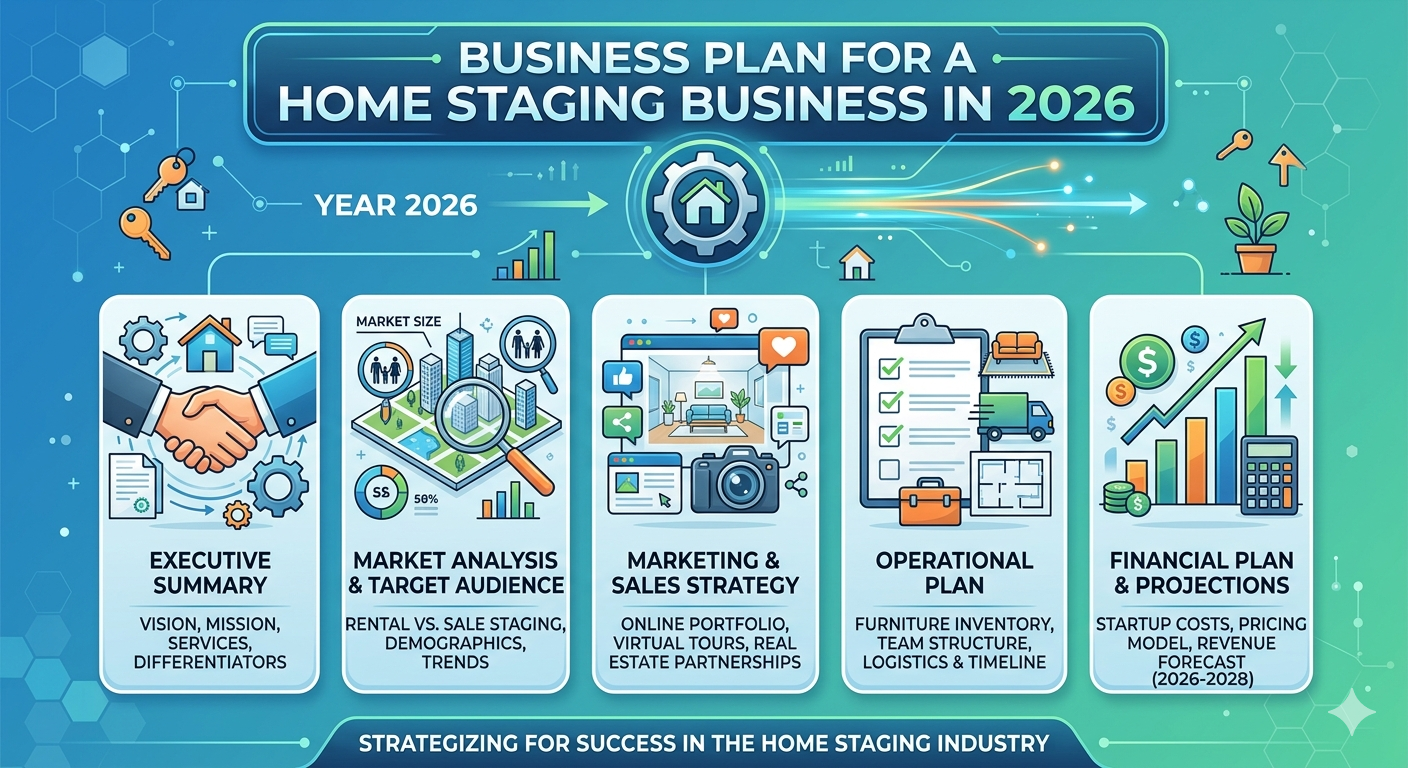
Starting a Home Staging Business in 2026 can be a highly rewarding venture, especially with the real estate market bouncing back and homeowners seeking to sell their properties faster and for higher prices. Home staging not only helps properties look their best but also increases buyer appeal. In this step-by-step guide, we’ll cover everything you need to know to launch a successful Home Staging Business, including AI-driven and virtual staging options.
What is a Home Staging Business?
A Home Staging Business involves preparing homes for sale by arranging furniture, decor, and accessories to make the property appealing to potential buyers. A well-staged home can highlight its strengths, minimize flaws, and create a welcoming atmosphere that encourages buyers to make offers.
In 2026, home staging is evolving beyond physical staging. Virtual and AI-enhanced staging tools are becoming increasingly popular, allowing you to offer modern services and scale your business more efficiently.
Step 1: Research Your Market
Before you start, it’s important to research the local real estate market:
- Identify the neighborhoods with high turnover rates.
- Understand the typical home sizes and styles.
- Study competitors’ pricing and services.
- Assess demand for virtual and AI staging services.
This research will help you position your Home Staging Business effectively and identify opportunities to stand out.
Step 2: Create a Business Plan
A strong business plan is crucial. Include:
- Mission and vision of your business.
- Service offerings: physical staging, virtual staging, AI-assisted staging.
- Pricing strategy.
- Marketing strategy (social media, real estate agent partnerships, website).
- Initial budget and projected earnings.
Having a clear plan will guide your decisions and attract potential investors or partners if needed.
Step 3: Legal Requirements and Registration
To operate legally:
- Choose a business structure (LLC, sole proprietorship, etc.).
- Register your business name.
- Obtain necessary licenses or permits (check local regulations).
- Get liability insurance to protect yourself from accidents or damages.
These steps ensure your Home Staging Business operates safely and professionally.
Step 4: Build Your Skills
While creativity is key, some skills are essential:
- Interior design basics.
- Color theory and furniture arrangement.
- Photography to showcase staged homes.
- Communication and negotiation with clients.
Consider taking courses in interior design or home staging certification programs to gain credibility.
Step 5: Source Furniture and Decor
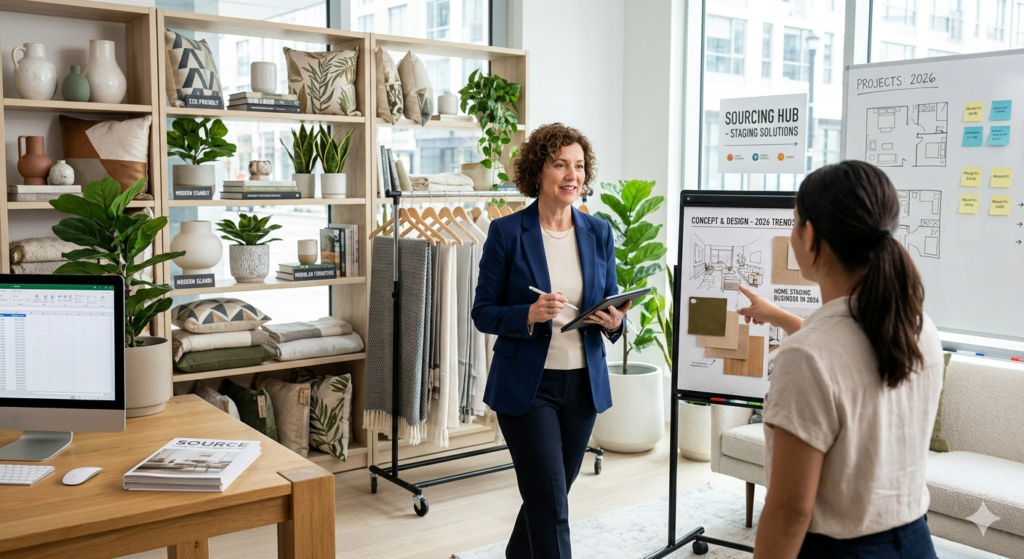
You’ll need items to stage homes:
- Rent or buy furniture and decor.
- Partner with rental companies or furniture stores.
- Invest in versatile pieces suitable for different styles and home sizes.
This allows you to stage homes efficiently and cater to different client preferences.
Step 6: Marketing Your Home Staging Business
Effective marketing is critical:
- Build a professional website showcasing your portfolio.
- Use social media platforms like Instagram, Pinterest, and TikTok to share before-and-after transformations.
- Network with real estate agents and brokers.
- Offer promotions to first-time clients.
Highlighting your expertise and results will help attract more clients.
Step 7: Offer AI and Virtual Staging
In 2026, AI and virtual staging are game-changers:
- Virtual Staging: Use software to digitally furnish homes without physical items. Great for empty properties or remote clients.
- AI Staging Tools: Automatically suggest furniture, decor, and layouts based on room dimensions and style.
- Benefits: Lower costs, faster turnaround, scalability, and appealing to tech-savvy buyers.
Integrating AI and virtual staging allows your Home Staging Business to offer cutting-edge services, helping you stand out in a competitive market.
Step 8: Pricing Your Services
Set competitive yet profitable prices:
- Consider the size of the home and complexity of staging.
- Offer package deals: basic, premium, and virtual staging.
- Include setup, removal, and photography fees.
Transparent pricing builds trust and ensures you cover costs while earning profit.
Step 9: Build Your Portfolio
A strong portfolio is your best marketing tool:
- Document staged homes with high-quality photos.
- Show a variety of styles: modern, traditional, minimalistic, and luxury.
- Highlight virtual and AI staging examples.
Clients will choose your Home Staging Business based on visible results, so showcase your best work.
Step 10: Expand and Scale
Once established:
- Hire a team for larger projects.
- Offer workshops or consultancy services for DIY home staging.
- Collaborate with real estate agencies for ongoing referrals.
- Expand services to include rental properties, commercial staging, and interior redesign.
Scaling strategically will maximize revenue and establish your brand.
Tips for Success in 2026
- Stay updated with interior design trends and AI staging tools.
- Focus on client satisfaction and build strong relationships with real estate agents.
- Offer eco-friendly and sustainable staging options.
- Use online reviews and testimonials to build credibility.
FAQs About Home Staging Business
Q1: Do I need formal training to start a home staging business?
A1: While not mandatory, formal training or certification in interior design or home staging enhances credibility and improves your skills.
Q2: How much can I earn from a home staging business in 2026?
A2: Earnings vary based on location, number of clients, and services offered. Many home stagers earn $3,000–$10,000 per month in the initial years, with potential for higher income as the business grows.
Q3: What is virtual staging, and is it effective?
A3: Virtual staging uses software to digitally furnish empty homes. It’s cost-effective, quick, and increasingly preferred by sellers and real estate agents, especially for online listings.
Q4: How do I market my home staging business?
A4: Build a website, showcase before-and-after photos on social media, network with real estate agents, and consider paid online ads targeting homeowners and realtors.
Q5: Can AI tools replace physical staging?
A5: AI and virtual staging complement physical staging but may not fully replace it for luxury properties or homes where tactile experience matters. Offering both options provides maximum flexibility for clients.